Major Retailers & Chains Pulling Lettuce Products Over Cyclospora Outbreak

Michigan had 6,148 cyclosporiasis cases recorded as of July 16, 2026, against a normal annual baseline of roughly 50. That number alone captures just how far outside the ordinary this summer’s cyclospora outbreak has traveled.
The parasite behind those cases, Cyclospora cayetanensis, spreads when food or water comes into contact with feces, typically through contaminated irrigation or wash water on farms. It is a microscopic parasite that infects food that has come into contact with human feces, most commonly when produce is irrigated or washed with contaminated water. The illness it causes, cyclosporiasis, produces symptoms that can cycle in and out for weeks, which means many people don’t connect their illness to a specific meal they ate days earlier.
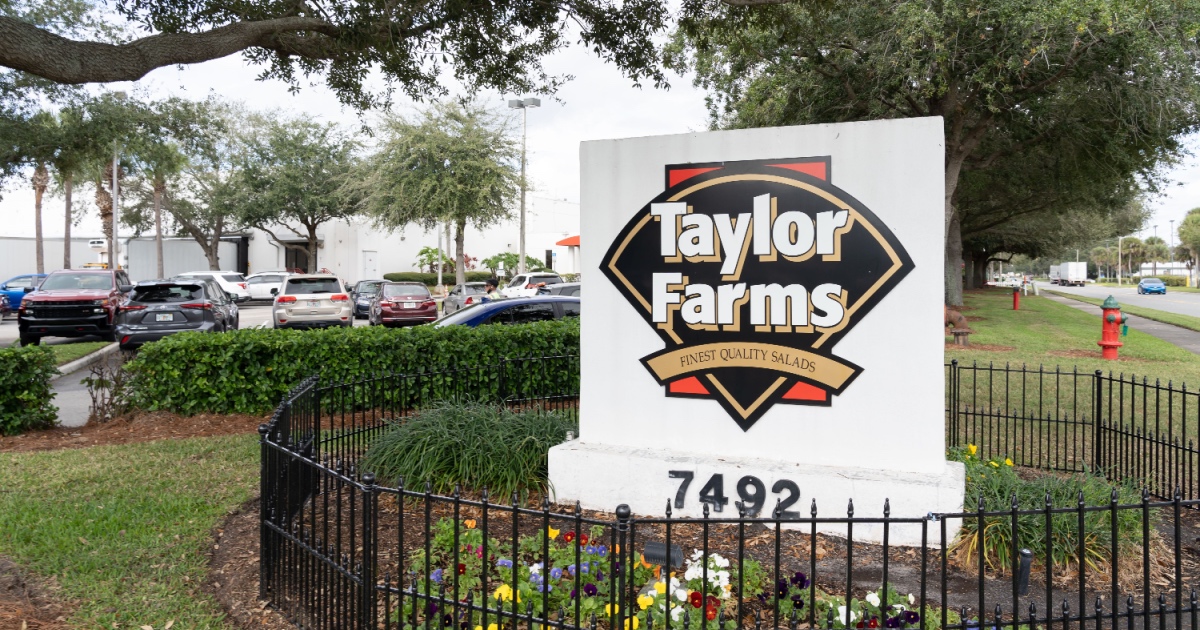
The CDC, FDA, and public health officials in several states are investigating a multistate cyclospora outbreak linked to shredded iceberg lettuce in five states. The trail leads to a single supplier, Taylor Farms de Mexico, and the ripple effects have triggered product removals at major retailers and restaurant chains across the country. Here is exactly who pulled what, and what you need to know if you bought any of these products.
1. Taylor Farms de Mexico
On July 17, Taylor Farms de Mexico of Guanajuato, Mexico, announced it was voluntarily removing all iceberg lettuce sourced from central Mexico from the U.S. market. This was not a partial or targeted removal. The company recalled all iceberg lettuce grown in central Mexico identified as the potential source of the Cyclospora outbreak, and stated the recall was completed with products removed from the marketplace.
The lettuce was distributed from June 29 through July 16, 2026, to 27 states. The full list of states includes Alabama, Arkansas, Connecticut, Florida, Georgia, Iowa, Illinois, Indiana, Kansas, Kentucky, Louisiana, Massachusetts, Maryland, Michigan, Missouri, Mississippi, North Carolina, New Hampshire, New Jersey, Ohio, Oklahoma, Pennsylvania, South Carolina, Tennessee, Texas, Virginia, and Wisconsin.
One important clarification from the company: no Taylor Farms branded products are involved in this recall. The affected lettuce was distributed through foodservice channels and under the Marketside brand at Walmart – not under the Taylor Farms consumer label you might find on packaged salad kits. The company confirmed iceberg lettuce is not used in its salad kits and no salad kits are associated with the outbreak. Taylor Farms also announced it is no longer sourcing iceberg lettuce grown in central Mexico for the remainder of the growing season.
2. Walmart
Taylor Fresh Foods’ recall notice included Marketside-brand product available at Walmart. Of the 35 affected products, two items were sold at Walmart under the Marketside brand: Iceberg Salad in 12 oz. and 24 oz. sizes with best-if-used-by dates of July 18 through August 3, 2026, and Shredded Lettuce in 8 oz. and 16 oz. sizes with the same date range.
Recalled Marketside-brand iceberg products were sold at select Walmart stores in Alabama, Arkansas, Florida, Georgia, Indiana, Kansas, Kentucky, Louisiana, Missouri, Mississippi, Oklahoma, Tennessee, Texas, Virginia, and West Virginia. That’s 15 states where Walmart shoppers may have purchased the affected product directly off store shelves.
If you bought any Marketside bagged iceberg lettuce – including both the salad and shredded varieties – with best-if-used-by dates in that July 18 to August 3, 2026 window, you should discard it immediately and not consume it. Full refunds are available at the location of purchase.
3. Taco Bell
Taco Bell is the restaurant chain most directly named in the five-state outbreak investigation. According to the CDC’s outbreak investigation page, a total of 1,644 people infected with Cyclospora and reporting exposure to Taco Bell have been reported by five states, with illnesses starting between May 13, 2026, and July 13, 2026, and 94 hospitalizations recorded.
The Michigan Department of Health and Human Services analyzed food exposure details from 190 cases who reported eating at Taco Bell, and ingredient-level analyses indicate that 90% of those interviewed reported eating iceberg lettuce. That is a striking concentration of exposure on a single ingredient. Taylor Farms supplies produce to Taco Bell, and Taco Bell removed ingredients including lettuce, cilantro, onion, pico de gallo, and guacamole from its menus in the Detroit area.
The CDC advises consumers not to eat shredded iceberg lettuce from Taylor Farms de Mexico at Taco Bell locations in Indiana, Kentucky, Michigan, Ohio, and West Virginia. As of July 17, 2026, according to Taco Bell’s newsroom, the chain confirmed it had completed removal of all affected Taylor Farms lettuce from its restaurants. Any Taco Bell location that received the recalled iceberg lettuce from Taylor Farms de Mexico is covered by the advisory.
4. Sysco
Sysco, the nation’s largest food distributor, halted distribution of all Taylor Farms iceberg lettuce products sourced from Mexico and instructed customers to destroy them. This is a significant step because Sysco sits between the farm and the restaurant: it moves food from producers to thousands of food service operations, including independent restaurants, hospitals, school cafeterias, and catering companies.
A Sysco spokesperson confirmed the company “proactively removed all Taylor Farms processed iceberg lettuce products from Mexico from distribution and instructed customers to destroy them” after learning regulators had indicated a suspected link between Taylor Farms’ lettuce and the five-state Cyclospora outbreak. What that means in practice is that the reach of the recall extends well beyond just the named chains. Any restaurant or institution that sources through Sysco and received Taylor Farms iceberg lettuce from central Mexico during the affected distribution window should have been notified to dispose of the product. If you’ve eaten at a smaller restaurant or a cafeteria-style setting in any of the 27 affected states since late June, there’s no easy way to know whether the lettuce served came through Sysco’s now-halted distribution chain.
5. Taco Bell’s Parent Company Chains: KFC and Pizza Hut
In addition to Taco Bell, Taylor Farms supplies produce to major fast food and grocery chains such as KFC, Pizza Hut, Walmart, and Trader Joe’s. While KFC and Pizza Hut have not been named as separate outbreak sites in the CDC or FDA investigation, their shared supply relationship with Taylor Farms drew scrutiny as the recall expanded.
The supply chain connection matters here. Taylor Farms is one of the largest fresh produce suppliers in North America, and the same central Mexico iceberg lettuce was distributed across multiple customers simultaneously. According to the FDA’s recall notice for Taylor Fresh Foods, Taylor Farms stated it was “actively removing the implicated products,” adding that “the company has stopped receiving product from the implicated lot, suspended distribution of the iceberg lettuce from Central Mexico, notified our customers, and we are continuing to work with the FDA, CDC, and state authorities.” Customers of KFC and Pizza Hut in the affected states should be aware that both chains rely on the same produce supplier at the center of this investigation, and should check with their local restaurant directly if concerned.
What the Numbers Tell You About This Outbreak
According to a CDC Health Alert Network notice, since May 1, 2026, Cyclospora has sickened at least 1,645 people in the U.S. and hospitalized 141, and the agency is investigating more than 5,100 additional cases that require further analysis to confirm whether they were also domestically acquired. This time last year, only 249 cases had been reported during the same period. That scale of increase, from 249 cases to more than 1,645 confirmed plus thousands under investigation, is not a routine uptick.
The FDA and CDC note that the illnesses in the five-state outbreak represent only a portion of Cyclospora infections currently under investigation, and the CDC is reporting illnesses across 34 states overall. The five-state Taco Bell cluster is one thread in a larger picture of domestic cyclosporiasis activity this summer.
One complicating factor: amid a nationwide rise in cases of cyclosporiasis, officials zeroed in on shredded iceberg lettuce sourced from a single supplier in Mexico, which was sold at Taco Bell locations in five states: Michigan, Ohio, Indiana, West Virginia, and Kentucky. Despite the scale of illness, laboratory confirmation has been elusive. The FDA initially reported a lettuce sample as testing positive on July 18, 2026, but laboratory experts re-reviewed the results and concluded the finding did not represent true amplification, and it should be considered a false positive. As of July 19, 2026, the FDA confirmed there are no confirmed positive product test results for Cyclospora, even as the epidemiological evidence continues to point to the iceberg lettuce.
The surveillance picture has also been affected by a policy change. According to NBC News, in July 2025, the CDC’s Foodborne Diseases Active Surveillance Network reduced mandatory tracking to just two pathogens – salmonella and E. coli – making testing for Cyclospora optional for the first time since 1997. That change may mean the reported case counts underrepresent true illness. Some people infected with Cyclospora have no symptoms at all. If not treated, the illness can lead to dehydration and severe complications that may require higher levels of care, lasting from a few days to a month or longer, and symptoms may seem to go away and then return one or more times.
What to Do Now
If you’ve purchased bagged iceberg lettuce recently and live in any of the 27 states covered by the Taylor Farms distribution window, check the brand and use-by date immediately. Marketside-brand Iceberg Salad (12 oz. or 24 oz.) and Shredded Lettuce (8 oz. or 16 oz.) with best-if-used-by dates between July 18 and August 3, 2026 should be discarded. Do not taste it to check – Cyclospora has no visible signs and produces no detectable odor.
The illness is contracted through contaminated food or drink and is characterized by watery diarrhea, loss of appetite, and weight loss, with symptoms typically showing one week after infection but potentially appearing as early as two days or as late as two weeks after exposure. If you ate at a Taco Bell in Michigan, Ohio, Indiana, West Virginia, or Kentucky between late May and mid-July and developed these symptoms, contact your doctor. The infection is treatable with antibiotics, but it does require a prescription. Telling your doctor you may have had exposure to a Cyclospora outbreak will help them order the right test, since the parasite requires a specific stool examination that isn’t part of a standard panel. Immunocompromised people may experience more severe illness of longer duration, along with complications requiring close medical attention.
Disclaimer: This information is not intended to be a substitute for professional medical advice, diagnosis, or treatment and is for information only. Always seek the advice of your physician or another qualified health provider with any questions about your medical condition and/or current medication. Do not disregard professional medical advice or delay seeking advice or treatment because of something you have read here.
AI Disclaimer: This article was created with the assistance of AI tools and reviewed by a human editor.
Read More: Parasites Are Causing Explosive Diarrhea to Surge. Here’s How To Minimize Your Exposure