Scientists Find Never-Before-Seen Metal Alloy in Hiroshima Blast Debris

A grain of metal barely wider than a human red blood cell sat unnoticed in a glass bead on a Japanese beach for nearly 80 years. When scientists finally looked inside it, they found something that had never existed before – on Earth or in any laboratory.
That grain was lodged inside one of the tiny glassy spheres that washed ashore in Hiroshima Bay, remnants of the August 1945 atomic bombing. The sphere itself was extraordinary enough. But the metallic speck inside it contained an alloy made of seven elements locked into a crystal structure no scientist had ever documented anywhere in the world. The combination of composition and atomic arrangement was completely new to materials science – and it took a nuclear fireball to create it.
The find is the result of painstaking work by an international research team led by Luca Bindi, an earth scientist at the University of Florence. It was published on July 29, 2026, in the journal Science Advances, just days before the 81st anniversary of the bombing itself. The study’s implications extend well beyond a single particle from a single war – they raise serious questions about what kinds of matter can be forged by extreme events, and whether nuclear blast sites might be among the most productive places on Earth to look for materials that can’t be replicated in any conventional lab.
What Hiroshimaite Is – and How It Was Found
In recent years, scientists examining the Hiroshima area have discovered unique pieces of fallout debris known as Hiroshimaites – tiny glassy droplets preserved in the beach sands of Hiroshima Bay. In 2019, retired geologist Mario Wannier found them while combing through beach sands from Hiroshima Bay. The particles, dubbed hiroshimaite, turned out to be fallout debris from the atomic blast. Wannier, a career geologist with expertise in studying tiny marine life, had been comparing biological debris in beach sands from different areas in an effort to gauge the health of local and regional marine ecosystems – and the glassy spherules were the last thing he expected to find. The 2019 study formally identifying these particles was published in the journal Anthropocene.
Hiroshimaites come in different shapes and sizes. Many are clear, with air bubbles trapped inside, whereas others are black, like obsidian. Previous research had suggested that such particles from atomic explosions were made mainly of calcium-aluminum-silicon glasses that formed at temperatures above roughly 1,800 degrees Celsius. They are, in the language of materials science, quenched glasses – matter that was briefly molten and then frozen so quickly that it preserves a snapshot of conditions that existed for mere fractions of a second.
For the new study, the team examined 34 hiroshimaite particles ranging in width from a few hundred micrometers to a few millimeters and found several metallic crystals in one of them. One glassy spherule contained many flecks of metal, making up only about one to three percent of the object. The team selected four grains, each roughly 10 micrometers across, and removed them by hand with fine needles. Three proved to be relatively ordinary iron-chromium alloys. The fourth did not.
Inside the Hiroshima Glass Artifact: A Crystal Structure Never Seen Before
Electron microprobe analyses revealed a homogeneous, silicon-rich composition containing iron, chromium, nickel, manganese, molybdenum, silicon, and aluminum. Single-crystal X-ray diffraction showed that the phase crystallizes with an ordered AlAu₄-type structure, an ordered derivative of β-Mn.
The alloy is a silicon-rich crystal containing six metals – iron, chromium, nickel, manganese, molybdenum, and aluminum – and has an ordered AlAu₄-type crystal structure. This combination of composition and crystal structure has never before been documented, says Luca Bindi, a geologist at the University of Florence and first author on the paper. The full study is published in Science Advances.
To grasp why this matters, some context on alloys is useful. A standard alloy like stainless steel consists of a few elements combined in a known structure under controlled industrial conditions. Multicomponent alloys – those formed when five or more metallic elements combine – typically require carefully controlled industrial conditions to produce. Unlike conventional metallurgical environments, a nuclear blast system permits stochastic atomic mixing of diverse metallic species before rapid solidification, potentially stabilizing phases that are otherwise metastable – meaning phases that are stable only within a very narrow set of conditions and would normally rearrange into something simpler given time.
The alloy found in the Hiroshima glass artifact is unusual not just in its composition. The ordered AlAu₄-type crystal structure it crystallized into had never been documented in any naturally occurring or synthetically produced material of this elemental makeup. Databases of thousands of known materials turned up nothing comparable.
How a Nuclear Fireball Forges New Matter
When the atomic bomb exploded over Hiroshima, the detonation generated a fireball surpassing 7,000 degrees Celsius, which vaporized buildings, soil, metal, glass, and water into a chaotic swirl of plasma. Urban materials vaporized during the detonation included structural steels containing iron, chromium, and nickel, aluminum alloys, copper-bearing components, and other industrial metals.
Researchers propose that metals from several sources vaporized, mixed in the fireball, condensed into a tiny molten droplet, and then froze almost instantly. Rapid cooling prevented the atoms from rearranging into the simpler structures they would normally favor. This is the key mechanism: under any normal cooling rate, the atoms would sort themselves into the most energetically stable configuration. The fireball’s ultrafast quenching trapped them in place before they could do that.
A nuclear explosion hits its environment like a lightning or meteor strike: the air gets surface-of-the-sun-level hot and then cools quickly, and different materials vaporize and come together in ways they usually wouldn’t. Because this all happens so fast, vaporized metals don’t have time to stabilize as they typically would. Bindi told Scientific American that “every small droplet effectively becomes an independent experiment.”
High-energy nuclear detonations generate extreme, transient physicochemical environments capable of producing previously unknown materials. The alloy was preserved within a Hiroshimaite spherule recovered from beach sands of Hiroshima Bay, formed during the 6 August 1945 atomic airburst. This finding demonstrates that nuclear plasma events may stabilize complex metallic phases and highlights atomic-blast debris as a natural laboratory for nonequilibrium alloy formation.
The Bomb That Made It: August 6, 1945
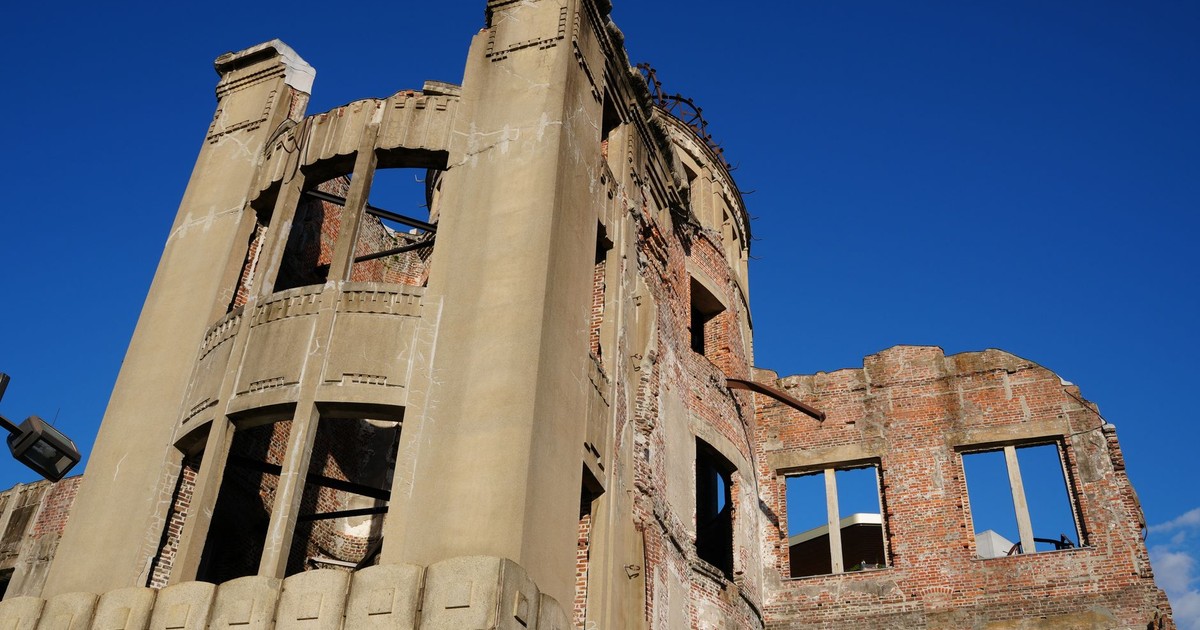
On August 6, 1945, at 8:15 am, the first atomic bomb was dropped on the center of Hiroshima. The device, known as “Little Boy,” was a gun-type weapon with a uranium core, dropped on Hiroshima. It exploded with a force of approximately 13 to 15 kilotons of TNT. Upon detonation, it produced a fireball that raised temperatures to 7,000 degrees Celsius.
Between 90,000 and 166,000 people are believed to have died from the bomb in the four-month period following the explosion. The physical city – its buildings, bridges, steel reinforcements, glass windows, and soil – was vaporized within a radius of kilometers. That catastrophic mixing of urban material into superheated plasma is precisely what the new research says produced the Hiroshima glass artifact containing the novel alloy.
The Trinity nuclear test detonated about 30 meters above the desert and coupled strongly with the ground. Hiroshima exploded much higher, reducing direct contact between the fireball and the surface. Each event therefore mixed different materials and followed a different path of heating, expansion and cooling, producing its own microscopic archive. The Hiroshima fireball drew its material primarily from the city itself – buildings, metals, glass – rather than from earth and soil, which partly explains the particular elemental composition of the alloy discovered inside the Hiroshimaite spherule.
A Pattern Emerging Across Nuclear Test Sites
Luca Bindi has now led or co-led a series of findings showing that nuclear explosions consistently create materials not found anywhere else in nature or in laboratories. A 2021 Proceedings of the National Academy of Sciences paper identified a previously unknown icosahedral quasicrystal in red trinitite – the glass produced when the Trinity blast fused desert sand with copper and other material from the test apparatus. Quasicrystals are materials whose atoms are arranged in a pattern that is ordered but never repeating – a structure that was once considered theoretically impossible in nature.
In May 2026, another PNAS study reported a previously unknown calcium-copper-silicon clathrate – a cage-like crystal – formed during the 1945 Trinity nuclear test; the first crystallographically confirmed clathrate identified among nuclear-explosion products. Both of these studies were led by the same Luca Bindi, who is now one of the world’s foremost authorities on nuclear blast-derived materials.
The alloy found in Hiroshima Bay is not a quasicrystal, but its structure can help scientists understand them better, Bindi says, because it’s similar to some of the atomic arrangements within quasiperiodic materials. Each new find at a nuclear test site adds to a growing picture: extreme, ultrafast thermodynamic events – nuclear blasts, meteorite impacts, possibly lightning strikes – may be a distinct and underexplored route to materials that no conventional manufacturing process can replicate.
Methodology: How the Team Analyzed the Sample
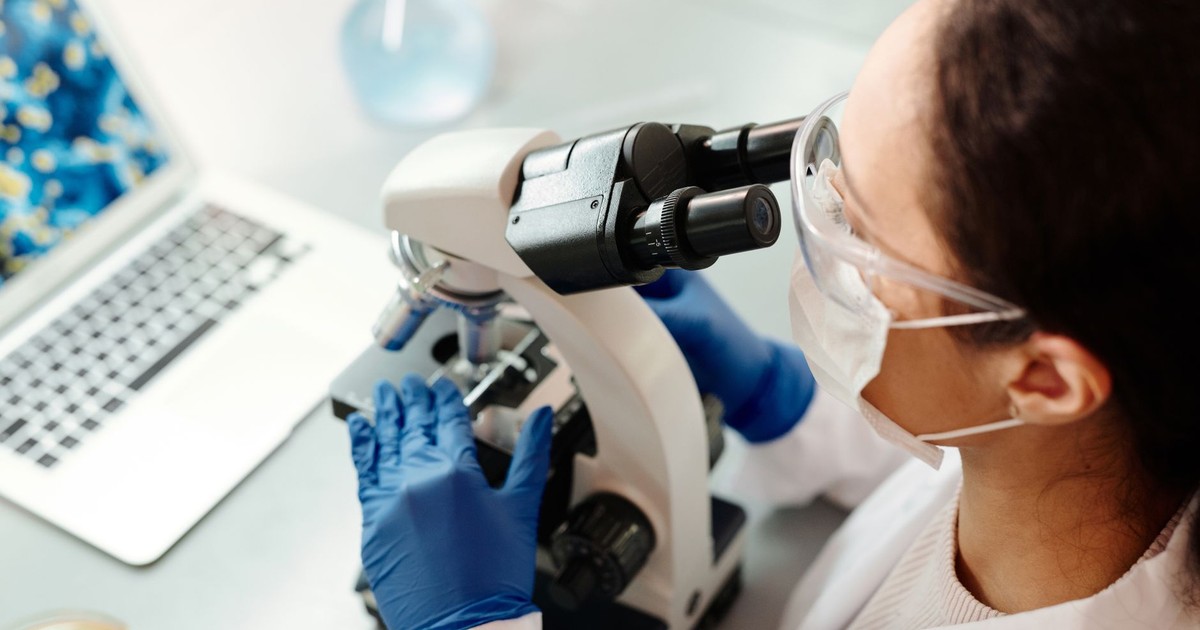
The research team’s analytical approach combined several techniques to characterize the alloy with precision. The Hiroshimaite particles were embedded in resin, polished, and analyzed under reflected-light microscopes. Electron microprobe analysis then mapped the chemical composition of the metallic grains within the samples, allowing researchers to identify the silicon-rich grain that would turn out to be the novel alloy.
The critical step was single-crystal X-ray diffraction, which determines how atoms are arranged within a material by measuring how X-rays scatter when they pass through a crystal. Electron microprobe analyses revealed the homogeneous, silicon-rich multi-element composition. Single-crystal X-ray diffraction showed that the phase crystallizes in space group P2₁3 with the ordered AlAu₄-type structure, an ordered derivative of β-Mn. That crystal symmetry classification is a precise descriptor of how the atoms are positioned relative to each other – and cross-referencing it against global materials databases confirmed the combination had never been documented.
Bindi noted that “even decades later, a grain only a few micrometers across can retain a detailed record of conditions that existed for only fractions of a second.” “These particles are not simply melted debris. They are physical archives of the explosion.” The Hiroshimaite spherules that carried this grain drifted in the aftermath of the blast, eventually settling into beach sediment where they have remained, largely undisturbed, for eight decades.
Limitations the Study Acknowledges
The study’s authors are careful about overstating what a single grain can prove. The alloy was found in one grain out of four metallic crystals isolated from one Hiroshimaite out of 34 examined. That’s a small sample, and the researchers acknowledge that the formation conditions inside any individual droplet would have varied. The broader claim – that nuclear blast debris constitutes a natural laboratory for discovering nonequilibrium materials – is well supported, but the frequency with which novel alloys form in such events remains an open question.
The discovery opens questions around what kinds of substances extreme events can create and whether they are “isolated curiosities” or part of a “more general class of materials.”
What This Means for You
Eighty years after the bombing of Hiroshima, the city’s beach sands are yielding scientific findings with implications that reach far beyond the historical event that created them. The Hiroshima glass artifact at the center of this discovery – a glassy spherule barely a millimeter wide, containing a metal grain 10 micrometers long – carries within it a crystal structure the entire scientific world had never seen.
High-energy nuclear detonations generate extreme, transient physicochemical environments capable of producing previously unknown materials. The Hiroshima alloy is the latest confirmation of that principle. Its seven-element composition and its ordered AlAu₄-type crystal structure could not have been achieved through any known industrial or natural process on Earth. The fireball over Hiroshima – for all its devastation – functioned, in the most specific sense, as a materials science event without precedent.
Because conditions in the fireball happen so fast, vaporized metals don’t have time to stabilize as they typically would, and every small droplet effectively becomes an independent experiment. That principle, verified now across multiple nuclear test sites from New Mexico to Japan, suggests that researchers may be far from finished. Trinitite from the Trinity test has already yielded a quasicrystal and a clathrate. Hiroshima beach sand has now yielded a novel multicomponent alloy. The question the paper leaves open – and the one most likely to drive the next phase of this research – is whether still more unknown phases are waiting in the glass that an atomic fireball left behind.
AI Disclaimer: This article was created with the assistance of AI tools and reviewed by a human editor.
Read More: Toddler’s Family Hike Ends With a 3,800-Year-Old Scarab Amulet Discovery